
Recover heat produced by AI, compute, or compatible owner-provided hardware.
QUESTIONS
WHAT WE KNOW.
WHAT WE KNOW.
WHAT WE ARE STILL BUILDING. CloudBoiler is under development.
Here is the clearest current picture of the platform, its intended uses, and the questions still being validated.
01
MANIFESTO
Your home is becoming the edge of the compute grid.
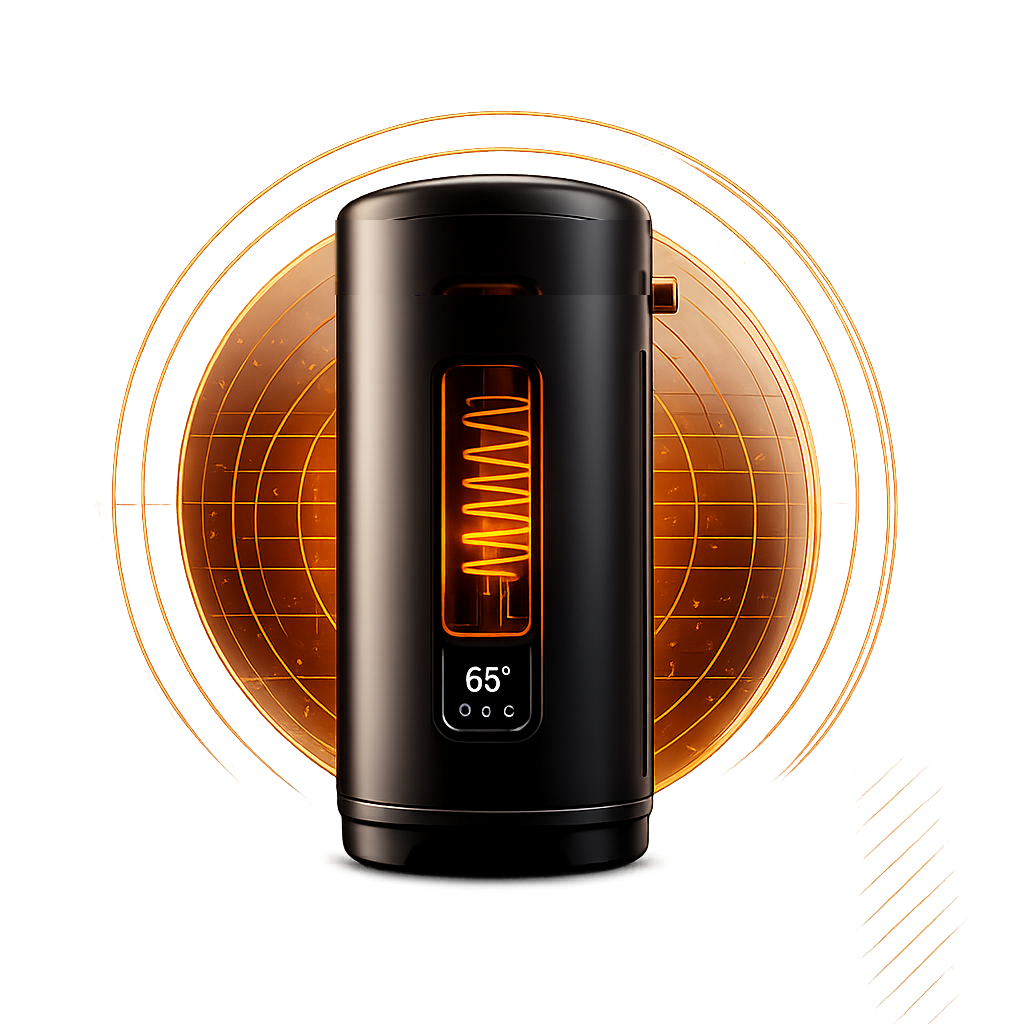
Every AI inference, every render, every simulation generates heat. CloudBoiler is being developed to route that heat where a home can actually use it.
Compute creates heat
Every workload — AI inference, rendering, simulation — generates thermal energy. CloudBoiler is being designed to capture it at the source.
One home, many uses
Recovered heat routes through a managed thermal bus to household branches you choose to enable — hot water, hydronics, storage, and more.
Managed, not one-off
Isolation, service states, and controlled rejection keep the platform safe and serviceable across time — not an appliance you throw away.
02
HOW IT WORKS
From compute work to useful home heat.
Computers create heat as they work. CloudBoiler is being developed to recover that heat and make it available to a managed network of household thermal uses.
Receive the recovered heat through a managed domestic thermal bus.
Direct thermal energy among selectable household branches.
Apply it to hot water, air heating, hydronics, storage, pools, or other supported thermal loads.
Support isolation, purge, fill, bleed, recommissioning, and controlled heat rejection at a high level.
03
PLATFORM PRINCIPLES
One platform, many household thermal uses.
PILLAR — 101
Managed
Thermal energy can be directed according to the needs and status of the system.
Platform principle
PILLAR — 202
Branchable
A common thermal network can serve multiple household thermal categories.
Platform principle
PILLAR — 303
Serviceable
Branches can be organized around isolation, maintenance, purge, fill, bleed, and recommissioning concepts at a high level.
Platform principle
PILLAR — 404
Expandable
The platform can evolve with different compute sources and thermal uses.
Platform principle
04
TECHNOLOGY
STRATIFIED TANK — 80–120 GAL
COMPUTE TRAY — NODEO
[ 1–4× GPU / TPU LIQUID-COOL ]
 GPUGPUTPUASIC
HX1 — COLD PLATE — LOOP
harvests waste heat — tank mid-region
WASTE HEATCAPTURE
THERMALSTORAGE
ENERGYRECOVERY
HEAT PUMP
HX2 — TOP-OFF
MCU — SAFETY
sensors — valves — pumps
165 FSUPERHEAT
140 FHX2 — TOP-OFF
110 FHX1 — COMPUTE-INJECT
80 FGPU INLET INJECTION
SUPERHEAT IN
HOT
COLD RETURN
DHW OUT
to showers — kitchen — radiant
COLD IN
municipal — supply
05
WHAT CAN CLOUDBOILER HEAT?
Put recovered heat to work around the home.
CloudBoiler is being developed as a branchable thermal platform. Different homes may use different combinations of thermal branches.
Domestic hot water
Use recovered compute heat to support everyday household hot-water demand.
CORE DEVELOPMENT CATEGORYHydronic space heating
Route heat to compatible radiators, fan coils, baseboard, or radiant systems.
ENGINEERING REVIEWHVAC / heated air
Transfer recovered heat into conditioned air through an air-side hydronic accessory.
FUTURE PILOT CATEGORYThermal storage
Store useful heat in buffer or thermal-mass systems for later use.
CORE DEVELOPMENT CATEGORYPool / spa
Direct suitable excess heat to water-heating branches where appropriate.
FUTURE PILOT CATEGORYControlled heat rejection
Managed fallback path when household thermal loads cannot accept more heat.
CORE DEVELOPMENT CATEGORYBYOC / source adapters
Allow compatible owner-provided or alternative compute hardware to participate as a heat source.
CONCEPT ONLY
06
SYSTEM LAYERS
One platform, five clean layers.
A shared model for what CloudBoiler is designed to do — from compute to routed household heat.
01
COMPUTE SOURCE
AI, simulation, rendering or compatible workloads generate heat as they run.
02
HEAT CAPTURE
A liquid-cooling or heat-capture interface receives thermal energy from the compute source.
03
THERMAL BUS
Recovered heat enters a managed CloudBoiler thermal bus that coordinates supply, return, and monitoring.
04
THERMAL BRANCHES
The bus makes thermal energy available to selected household branches — hot water, hydronics, storage, HVAC, pool and more.
05
MONITORING · SERVICE · REJECTION
Isolation, purge, fill, bleed, recommissioning, and a controlled rejection path keep the system safe and serviceable.
07
FLEXIBLE COMPUTE SOURCES
What can drive the platform?
The thermal platform is being developed to work with more than one kind of compute — from integrated CloudBoiler hardware to compatible owner-provided sources through developmental BYOC adapters.
Integrated CloudBoiler compute
Purpose-built compute hardware integrated with the thermal platform.
CORE DEVELOPMENT CATEGORYLiquid-cooled AI / server hardware
AI accelerators, GPUs, and server hardware designed for direct-to-chip or immersion cooling.
ENGINEERING REVIEWOwner-provided computers
Compatible owner-provided hardware paired through supported thermal interfaces.
BYOC · FUTURE PILOTGaming / workstation adapter
A future heat-extractor or source-adapter concept for gaming rigs and workstations.
CONCEPT ONLYRack / cabinet configurations
Appropriate rack or cabinet layouts for small-scale distributed compute.
DEVELOPMENTAL
08
DEPLOYMENT MODES
One platform, four ways to deploy it.
The same thermal platform is being explored across a range of deployment scales — from a single home to coordinated fleets. These are deployment modes, not finalized product SKUs.
HOMESINGLE HOUSEHOLD
A whole-home thermal platform serving selected household branches.
DEPLOYMENT MODE
PRORESIDENTIAL · LIGHT COMMERCIAL
Higher-capacity or more configurable residential and small-commercial use.
DEPLOYMENT MODE
FLEETMULTI-PROPERTY
Coordinated deployments across multiple homes or properties.
DEPLOYMENT MODE
GRIDAGGREGATED · UTILITY
Future aggregation and utility-program participation.
CONCEPT ONLY
09
WHY IT MATTERS
Three ideas, one flexible platform.
01
USE HEAT TWICE
Compute consumes electricity and creates heat. CloudBoiler seeks to make that heat useful.
02
MOVE COMPUTE CLOSER TO THE LOAD
Distributed compute can place thermal output near the homes and buildings that can use it.
03
BUILD A FLEXIBLE THERMAL PLATFORM
A branchable system can serve more than one appliance or one thermal use.
10
FAQ
Questions, answered honestly.
CloudBoiler is under development. Answers below are high-level and reflect the current design intent — not final specifications, guarantees, or commitments.
A PLATFORM
What is CloudBoiler?
CloudBoiler is a whole-home thermal platform being developed to recover heat from compute hardware and route it to selected household thermal branches through a managed thermal bus.
Is CloudBoiler only a water heater?
No. Hot water is one supported branch. The platform is being designed to also serve hydronic space heating, HVAC, thermal storage, pool/spa, and controlled rejection where those branches apply.
What is a thermal bus?
A managed loop that receives recovered heat from the compute source and makes it available to the household thermal branches the platform is configured to serve.
What does branchable mean?
A common thermal network can serve multiple household thermal categories. Different homes may enable different combinations of branches.
What does serviceable mean?
Branches are being designed to support isolation, purge, fill, bleed, and recommissioning concepts so the platform stays maintainable over time.
B THERMAL USES
What can the recovered heat be used for?
Depending on the configuration: domestic hot water, hydronic space heating, HVAC (through an air-side accessory), thermal storage, pool or spa heating, and a controlled rejection path for excess heat.
Does every home need every branch?
No. Branches are optional and homes are expected to enable the ones that match their thermal needs and system compatibility.
Can it support hot water?
Domestic hot water is a core development category for the platform.
Can it support heating or HVAC?
Hydronic space heating is in engineering review. HVAC / heated air via an air-side hydronic accessory is a future pilot category.
What happens when the home cannot use more heat?
A controlled heat-rejection path is being developed as a managed fallback when household thermal loads cannot accept more heat.
C COMPUTE
What kind of compute hardware may work with CloudBoiler?
Integrated CloudBoiler compute is the core development category. Liquid-cooled AI or server hardware is in engineering review. Owner-provided hardware through source-adapter concepts is a future pilot category.
What is BYOC?
Bring Your Own Compute — a developmental concept that would allow compatible owner-provided hardware to participate as a heat source through supported thermal interfaces.
Can I connect my gaming computer?
A future heat-extractor or source-adapter concept for gaming rigs and workstations is under exploration. It is not a shipping capability today.
Is compatibility guaranteed?
No. Not every computer will be compatible, and there is no universal retrofit promise. A final compatibility list does not yet exist.
Does CloudBoiler guarantee compute income?
No. There is no guaranteed compute utilization, workload availability, or income from the platform.
Does it guarantee private or offline AI?
No. Some configurations may support local or distributed compute use cases, but total privacy, offline AI, or guaranteed cybersecurity are not promised.
D INSTALLATION AND SERVICE
Can homeowners install it themselves?
No. CloudBoiler is not a consumer self-installation product. Field installation and service by qualified professionals is expected.
Who would install and service it?
Practical deployment is expected to involve field installation, service, energy-program coordination, and appropriate professional review. The specific installer network is being developed.
Is the system certified?
No specific certifications are being claimed. Any final certifications will depend on engineering validation and applicable review.
Is it available in every jurisdiction?
No. Availability, permitting, and applicable regulations will vary by jurisdiction.
What is still being engineered?
CloudBoiler is in development. Final configuration, compatibility and installation requirements will depend on engineering validation, site conditions and applicable professional review.
E PILOT AND AVAILABILITY
Can I buy one now?
No. CloudBoiler is not on sale. The current program is a pilot/waitlist for homeowners, engineers, installers, and strategic partners.
Is this a pre-order?
No. Joining the pilot waitlist is free, non-binding, and is not a pre-order.
How do I join the pilot list?
Register interest via the pilot waitlist form on the Pilot & Partners page. The team will follow up when relevant.
Who is a good pilot candidate?
Homeowners with the right site conditions, engineers and installers with relevant expertise, property owners and portfolio operators, utilities and program operators, and compute or energy strategic partners.
When will installations begin?
No public installation dates are being committed. Prototype and pilot installation timing depends on engineering validation and pilot selection.
How are pilot participants selected?
Interest → site screening → technical fit review → engineering and installation planning → prototype or pilot agreement → installation and validation → monitoring and learning.
F PARTNERS
Can builders, utilities, installers or compute providers participate?
Yes — the pilot program is being developed with a range of homeowner and partner categories. Reach out via the pilot form or contact the team directly.
Can a company propose a pilot?
Yes. Companies exploring a pilot deployment or partnership can propose a pilot scope through the pilot waitlist or by contacting the team.
Can a property portfolio participate?
Yes. Multi-property or fleet deployments are one of the deployment modes under exploration.
How can an investor or strategic partner contact the team?
Use the TALK TO THE TEAM secondary CTA on the Pilot & Partners page, or email contact@cloudboiler.energy.
11
JOIN THE PILOT
Help build the next generation of home thermal infrastructure.
CloudBoiler is developing its first whole-home platform and accessory branches with homeowners, engineers, installers, and strategic partners.
TALK TO THE TEAM →